Peka Dubrovnik
Peka Dubrovnik is the dish travellers dream about long before they land on the coast: slow-roasted lamb, veal, or octopus with potatoes and vegetables, cooked ispod peke — under a heavy iron bell buried in embers. At Konoba Pjatanca we treat peka as both craft and tradition, because traditional food Dubrovnik is never complete without this aroma of smoke, rosemary, and patience.

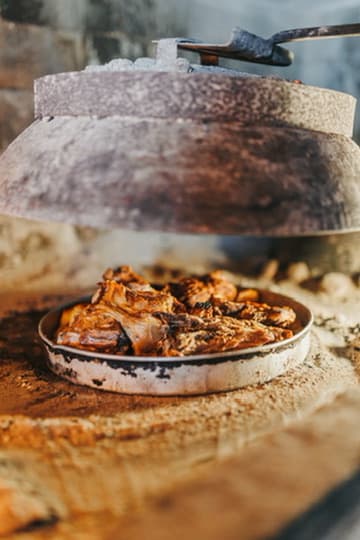
Traditional peka prepared under the bell in Dubrovnik — Konoba Pjatanca
What is peka?
Peka names both the domed metal lid and the entire meal cooked beneath it. A wide tray holds layered potatoes, onions, carrots, sometimes seasonal greens, and your chosen protein — often lamb or veal, or octopus for a coastal twist. Olive oil, wine, garlic, bay, and wild herbs tie the flavours together before the bell seals everything inside. Heat from glowing hardwood embers circulates slowly, so nothing boils violently; instead, juices reduce, edges crisp, and the centre stays impossibly tender. For anyone searching best local food Dubrovnik experiences, peka is the benchmark plate that separates a souvenir-trip dinner from a meal you will still smell when you close your eyes at home.
How peka is cooked
Preparation begins long before service. We trim meat, par-cook sturdy vegetables if needed, and arrange the tray so heat reaches every layer evenly. The bell — peka — is preheated, placed over the ingredients, and ringed with embers; ash may be spooned on top to hold temperature steady. For at least three hours, the cook tends the fire, adding charcoal, rotating coals, and listening for the quiet sizzle that says the meal is progressing. There are no microwave shortcuts or pressure-cooker cheats: peka Dubrovnik purists know the difference instantly. When the bell lifts, steam rises, colours deepen, and the table suddenly feels like a family feast on a Pelješac hillside even though you are minutes from Dubrovnik's limestone streets.
Timing matters as much as technique. Too little heat leaves potatoes chalky; too much scorches the underside before the meat relaxes. Our kitchen has refined that balance across decades, which is why guests who compare traditional food Dubrovnik restaurants often mention consistency alongside flavour. We also match the wine — bold reds for lamb, structured whites or lighter reds for octopus — so every bite feels anchored in Dalmatia.
Why peka is famous in Croatia and especially on the coast
Historically, peka solved a practical problem: how to feed a crowd with one vessel and minimal attention while fields, boats, or guests demanded the host's time. The method travelled across Dalmatia, Bosnia and Herzegovina, and other regions, picking up local herbs and proteins along the way. On the coast, octopus peka celebrates the Adriatic; inland hills favour lamb. Dubrovnik sits at the crossroads, so menus — including ours — honour both traditions. Fame followed because the results are dramatic: falling-apart meat, potatoes that taste like they absorbed a whole garden, and a theatrical reveal that turns dinner into an event. When blogs rank Croatian restaurant Dubrovnik experiences, peka is almost always the paragraph written in all caps.
Social media amplified the spectacle, but the emotional core stayed the same. Families still book peka for birthdays; captains invite crews after charter; couples celebrate anniversaries with a single shared platter. That sense of abundance is why peka Dubrovnik searches spike every summer — people want the story and the flavour together.
Festivals, saints' days, and Sunday lunches along the coast still revolve around trays too heavy for one person to carry. Grandmothers pass down tricks — how thick to slice potatoes, when to splash wine, which wood burns cleanest — while younger cooks experiment with presentation. Yet the soul of the dish remains unchanged: fire, time, and a bell that turns simple ingredients into best local food Dubrovnik pilgrims cross continents to find. That lineage is what we honour when we light our embers at Konoba Pjatanca.
Lamb, veal, octopus: choosing your peka
Lamb peka carries the deepest herbal notes and pairs with robust reds; veal stays milder and silkier, ideal for guests who prefer gentler gaminess; octopus peka delivers briny sweetness against soft potatoes, a love letter to seafood Dubrovnik traditions without abandoning the bell. We are happy to advise based on party size, appetite, and what the market supplied that morning. Vegetarians can enjoy many other Dalmatian plates on our menu, though authentic peka remains centred on slow-roasted proteins.
Ordering peka in advance
Because true peka needs hours, we require advance notice — ideally when you reserve your table — so we can fire the embers at the right moment. Walk-ins may enjoy grilled fish, pasta, risotto, and other classics, but peka Dubrovnik should be planned like a small event. Call, WhatsApp, or use our online reservation form; mention the number of guests and your preferred protein. We will confirm timing and help you build the rest of the meal around this centerpiece.
Why dine at Konoba Pjatanca
Our family has welcomed guests since 1997, combining respect for tradition with the warmth of a neighbourhood konoba. We sit on Koločepska, close enough to the Old Town for an easy stroll, far enough to feel like a secret shared between people who love traditional food Dubrovnik locals actually eat. When the bell lifts in our kitchen, we want the room to pause — then laugh, pour another glass, and tear bread for dipping. That is the peka experience we protect.
Ready to taste it? Explore our Dalmatian menu, browse seafood Dubrovnik specialties, or reserve your table and tell us you are coming for peka.
See you under the bell
From the first spark of the fire to the last potato soaked in jus, peka rewards patience. Share it with people you love, leave room for wine, and let Dubrovnik taste like smoke, sea air, and rosemary — the way we remember it from childhood.
Reserve a TableFAQ
- How long does peka take to prepare?
- Peka is slow-cooked under the bell for around three hours. There are no shortcuts.
- Do I need to reserve peka in advance?
- Yes. Peka must be ordered at least three hours in advance.
- What is peka made of?
- Peka is prepared with meat or seafood, potatoes, vegetables, olive oil and local spices, cooked together under the bell.